Our science
Building on our foundational expertise in carbohydrate chemistry and cell cycle biology, we develop innovative treatments for unmet patient needs with a focus on iron metabolism and blood-related disorders.


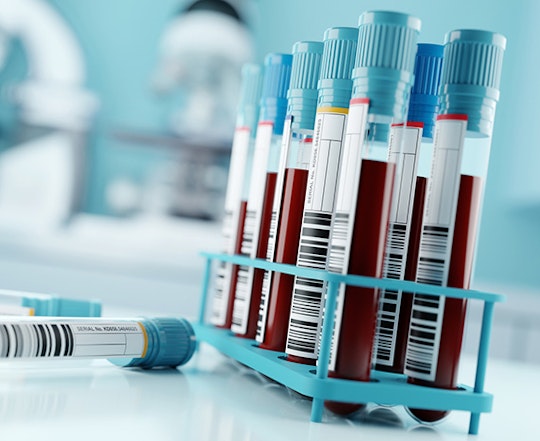
Iron deficiency anemia (IDA) is the most common form of anemia worldwide and occurs when the body lacks sufficient iron to produce healthy red blood cells.
Iron is essential not only for oxygen transport, but also for storing oxygen, producing energy, and supporting cell growth.
Iron deficiency is believed to be the leading cause of anemia globally, though other causes include deficiencies in folic acid or vitamin B12, chronic inflammation, parasitic infections, or disorders affecting red blood cell production.
Miller JL. Iron deficiency anemia: a common and curable disease. Cold Spring Harb Perspect Med. 2013;3(7):a011866. Published 2013 Jul 1. doi:10.1101/cshperspect.a011866
Camaschella C. Iron deficiency: new insights into diagnosis and treatment. Hematology Am Soc Hematol Educ Program. 2015;2015:8-13. doi:10.1182/asheducation-2015.1.8
World Health Organization. WHO Guideline on Use of Ferritin Concentrations to Assess Iron Status in Individuals and Populations. World Health Organization; 2020.
Pasricha SR, Tye-Din J, Muckenthaler MU, Swinkels DW. Iron deficiency. Lancet. 2021 Jan 16;397(10270):233-248.
Global Burden of Disease Collaborative Network. Global Burden of Disease Study 2019 (GBD 2019) Results. Seattle, United States: Institute for Health Metrics and Evaluation (IHME); 2020. Available from http://ghdx.healthdata.org/gbd-results-tool.
An estimated 10 million people in the United States are iron deficient, with 5 million of them living with IDA.
While iron deficiency can begin silently, once it advances to IDA, it can have measurable effects on physical and mental health. IDA may contribute to:
Increased risk of premature birth during pregnancy
Higher incidence of stroke
Delayed cognitive and physical development in children
Fatigue, poor concentration, and mood changes in adults
Cognitive decline and higher dementia risk in older populations
Reduced quality of life due to decreased energy and endurance
Greater risk of infections due to weakened immune defenses
Because symptoms of iron deficiency anemia often overlap with those of chronic conditions like chronic kidney disease, inflammatory bowel disease, or heart failure, it is frequently overlooked or misattributed to the underlying disease.
Miller JL. Iron deficiency anemia: a common and curable disease. Cold Spring Harb Perspect Med. 2013;3(7):a011866. Published 2013 Jul 1. doi:10.1101/cshperspect.a011866
World Health Organization. Iron Deficiency Anaemia: Assessment, Prevention and Control. 2001
Doom JR, Georgieff MK, Gunnar MR. Institutional care and iron deficiency increase ADHD symptomology and lower IQ 2.5-5 years post-adoption. Dev Sci. 2015;18(3):484-494. doi:10.1111/desc.12223
Camaschella C. Iron deficiency: new insights into diagnosis and treatment. Hematology Am Soc Hematol Educ Program. 2015;2015:8-13. doi:10.1182/asheducation-2015.1.8
Sachdev H, Gera T, Nestel P. Effect of iron supplementation on mental and motor development in children: systematic review of randomised controlled trials. Public Health Nutr. 2005;8(2):117-132. doi:10.1079/phn2004677
Zage AU, Nas FS, Ali M, Aliyu S. Maternal Anemia and Risk of Neonatal Mortality: A Review. Neonatal. 2024;4(1):16. doi:10.35702/neo.10016
Andro M, Le Squere P, Estivin S, Gentric A. Anaemia and cognitive performances in the elderly: a systematic review. Eur J Neurol. 2013;20(9):1234-1240. doi:10.1111/ene.12175
Thein M, Ershler WB, Artz AS, et al. Diminished quality of life and physical function in community-dwelling elderly with anemia. Medicine (Baltimore). 2009;88(2):107-114. doi:10.1097/MD.0b013e31819d89d5


The most common symptom of iron deficiency anemia (IDA) is fatigue, which can interfere with daily activities and overall functioning.
In some cases, individuals may experience cravings for non-food substances like ice or clay—a condition known as pica—which can be a sign of IDA.
These symptoms result from reduced oxygen delivery to body tissues.
Haas JD, et al. Maternal anemia and risk of neonatal mortality: a review. J Nutr. 2001;131(2S-2):676S-688S; discussion 688S-690S.
Mayo Clinic. Iron deficiency anemia - Symptoms & causes. Accessed August 6, 2024. https://www.mayoclinic.org/diseases-conditions/iron-deficiency-anemia/symptoms-causes/syc-20355034
Mayo Clinic. Anemia - Symptoms and causes. Accessed August 6, 2024. https://www.mayoclinic.org/diseases-conditions/anemia/symptoms-causes/syc-20351360
Cleveland Clinic. Anemia: Symptoms, Causes & Treatment. Accessed August 6, 2024. https://my.clevelandclinic.org/health/diseases/3929-anemia
Miller JL. Iron deficiency anemia: a common and curable disease. Cold Spring Harb Perspect Med. 2013;3(7):a011866. Published 2013 Jul 1. doi:10.1101/cshperspect.a011866
Ebner N, von Haehling S. Iron deficiency in heart failure: a practical guide. Card Fail Rev. 2019;5(3):173–175.
Iron deficiency anemia (IDA) is most often the result of untreated or unrecognized iron deficiency.¹ It can arise from several underlying causes, typically involving inadequate iron intake, impaired absorption, or excessive iron loss.
There are two main types of iron deficiency that may lead to anemia:
Absolute iron deficiency, when iron stores are depleted.
Functional iron deficiency, when iron stores are present but cannot be properly mobilized for use.
Common underlying causes of IDA include:
Heavy menstrual bleeding
Pregnancy, both during and after childbirth
Chronic inflammatory diseases, such as heart failure, inflammatory bowel disease, and chronic kidney disease
Cancer or cancer-related treatments (e.g., chemotherapy, surgery)
Surgical or traumatic blood loss
Frequent blood donation
Poor dietary iron intake or malabsorption due to gastrointestinal disorders
Miller JL. Iron deficiency anemia: a common and curable disease. Cold Spring Harb Perspect Med. 2013;3(7):a011866.
Dignass A, Farrag K, Stein J. Limitations of serum ferritin in diagnosing iron deficiency in inflammatory conditions. Int J Chronic Dis. 2018;2018:9394060.
Camaschella C. Iron-deficiency anemia. N Engl J Med. 2015;372(19):1832–1843.
Busti F, Campostrini N, Martinelli N, Girelli D. Iron deficiency in the elderly: ready for prime time? Pharmaceuticals (Basel). 2018;11(4):94.
Lopez A, Cacoub P, Macdougall IC, Peyrin-Biroulet L. Iron deficiency anaemia. Lancet. 2016;387(10021):907–916.


The primary goal of treating iron deficiency anemia (IDA) is to replenish iron stores and restore hemoglobin to normal levels.
Oral iron supplements are commonly used as first-line treatment, particularly in patients with mild or moderate IDA and no signs of malabsorption or ongoing blood loss.
It may take several months to restore iron levels.
Gastrointestinal side effects (e.g., constipation, nausea, abdominal discomfort) are common and may limit adherence.
Inflammatory conditions can reduce absorption, making oral iron less effective.
IV iron is often used when:
Oral iron is poorly tolerated or ineffective.
There is a need for rapid correction of anemia.
The patient has a chronic inflammatory condition (e.g., IBD, CKD, heart failure) that impairs iron absorption or mobilization.
IV iron bypasses the gastrointestinal tract and allows for direct replenishment of iron stores, often with fewer administrations and faster improvement in hemoglobin levels.
Jimenez K, Kulnigg-Dabsch S, Gasche C. Management of iron deficiency anemia. Gastroenterol Hepatol (N Y). 2015;11(4):241–250.
Strauss WE, Auerbach M. Safety and efficacy of intravenous iron therapy in patients with iron-deficiency anemia: a systematic review. Patient Relat Outcome Meas. 2018;9:285–298.
Johns Hopkins Medicine. Iron-deficiency anemia. Johns Hopkins Medicine; [cited 2024 Aug 6]. Available from: https://www.hopkinsmedicine.org/health/conditions-and-diseases/irondeficiency-anemia
Gasche C, Lomer MCE, Cavill I, Weiss G. Iron, anaemia, and inflammatory bowel diseases. Gut. 2004;53(8):1190–1197. doi:10.1136/gut.2003.035758
Weiss G, Goodnough LT. Anemia of chronic disease. N Engl J Med. 2005 Mar 10;352(10):1011-23. doi: 10.1056/NEJMra041809.
Pasricha SR, Tye-Din J, Muckenthaler MU, Swinkels DW. Iron deficiency. Lancet. 2021;397(10270):233–248.
A leader in providing innovative treatments for unmet patient needs, with a focus on iron metabolism and blood related disorders.

Explore our products.

